Author: edifire

  • AI-Powered Orchestration: Why Automation Is No Longer Just a Tool, It’s a Teammate

    AI-Powered Orchestration: Why Automation Is No Longer Just a Tool, It’s a Teammate

    AI-Powered Orchestration: Why Automation Is No Longer Just a Tool, It’s a Teammate

    In the fast-paced, hyper-connected world of modern enterprise, the definition of work is rapidly evolving. For decades, automation has been the silent engine driving efficiency—a reliable tool designed to handle repetitive, mundane tasks and free up human workers for higher-level, strategic thinking. But as we cross the threshold into the era of advanced artificial intelligence, automation is undergoing a profound and fundamental transformation. Enter AI-powered orchestration: a paradigm shift that elevates automation from a mere mechanical tool to an intelligent, proactive, and indispensable teammate.

    The Evolution: From Mechanical Automation to Intelligent Orchestration

    To understand the magnitude of this shift, we must first look at where we started. Traditional automation typically involves strict, rule-based processes. You define a trigger, set a linear series of actions, and the system executes them flawlessly every time. It is fantastic for predictable, high-volume tasks like data entry, basic invoice processing, or sending scheduled emails. However, traditional automation has severe limitations. It struggles with ambiguity, fails when faced with complex decision-making, and breaks down completely when it encounters unforeseen changes or exceptions.

    AI-powered orchestration changes the game entirely by introducing cognitive capabilities and contextual awareness into the operational mix. It doesn’t just blindly follow pre-defined scripts; it understands context, learns from past interactions, and makes decisions dynamically based on real-time data. Instead of executing isolated automated tasks, orchestration manages complex, multi-layered workflows across various disparate systems, legacy applications, and even human teams. It is the conductor of the enterprise symphony, ensuring every instrument plays in perfect harmony.

    Why AI is the Ultimate Enterprise Teammate

    High-tech dashboard showing AI orchestration

    When leaders stop viewing AI as just another piece of software and start seeing it as a collaborative partner, its true value becomes breathtakingly clear. Here is how this advanced orchestration technology acts less like a cold, rigid program and more like a dynamic, invaluable teammate:

    1. Proactive Problem Solving and Predictive Action

    Unlike traditional automation, which waits passively for a predefined trigger, AI orchestration can anticipate issues before they escalate into crises. By analyzing vast amounts of enterprise data in real-time—from network traffic and server loads to global supply chain logistics and customer sentiment—it can identify subtle patterns and anomalies that a human analyst might miss. For example, it can predict a potential supply chain bottleneck based on emerging geopolitical news and global weather patterns, automatically suggesting or even executing contingency plans, such as rerouting shipments or adjusting inventory orders, before the business feels any impact.

    2. Seamless Cross-Platform Integration and Communication

    A good human teammate knows how to communicate and collaborate with everyone in the office. AI orchestration excels at connecting siloed, disparate systems. It acts as a universal translator and central nervous system for your tech stack, enabling your Customer Relationship Management (CRM) system to talk seamlessly with your Enterprise Resource Planning (ERP) software, marketing automation platforms, and customer support ticketing systems. It gathers insights from all these diverse sources to provide a unified, holistic view of operations, breaking down departmental silos and ensuring everyone—human or machine—is operating from the same single source of truth.

    3. Context-Aware Decision Making at Scale

    Perhaps the most “human” trait of AI orchestration is its ability to understand nuance and context. It doesn’t just process isolated data points; it analyzes the complex relationships between them. When a high-value client submits an urgent support ticket, an AI orchestrator doesn’t just put it in a queue. It analyzes the client’s entire history, current contract value, recent sentiment in communications, and the specific nature of the problem. It then intelligently prioritizes the ticket and routes it to the most qualified human agent, automatically surfacing relevant documentation, past interactions, and even suggested responses, drastically reducing resolution time and improving client satisfaction.

    4. Continuous Learning and Exponential Improvement

    A traditional software tool remains static until a developer manually pushes an upgrade. A teammate, however, learns from experience and grows more capable over time. AI-powered orchestration systems leverage advanced machine learning algorithms to continuously refine their operations. The more workflows they orchestrate, the more data they ingest, the better they get at predicting outcomes, optimizing resource allocation, and uncovering hidden efficiencies that were previously invisible to human management.

    The Profound Impact on the Human Workforce

    A persistent fear surrounding advanced AI is that it will render human workers obsolete. However, the reality of AI orchestration points to a very different future: not the end of human work, but the elevation of it. By offloading the heavy burden of complex, multi-system coordination, data gathering, and routine decision-making to an AI teammate, human employees are liberated.

    They are empowered to focus their energy on what humans do best and what machines still cannot: creative problem-solving, empathetic leadership, strategic long-term planning, and building complex, nuanced relationships with clients and partners.

    Imagine a modern marketing department where the AI orchestrator handles the granular details—optimal timing for emails, platform-specific content formatting, continuous A/B testing across dozens of global markets, and real-time budget reallocation based on campaign performance. Meanwhile, the human marketers focus purely on crafting compelling brand narratives, dreaming up innovative campaign concepts, and understanding deep human psychology. This synergy between human creativity and AI execution is where the true, sustainable competitive advantage of the future lies.

    A Roadmap: Implementing AI Orchestration in Your Business

    Transitioning from basic, task-level automation to intelligent AI orchestration is not just a technological upgrade; it is a strategic business transformation. It requires a thoughtful, phased approach:

    1. Assess Your Readiness and Data Maturity

    Evaluate your current data infrastructure honestly. AI thrives on high-quality data. Ensuring your enterprise data is clean, accessible, structured, and secure is a non-negotiable first step. Identify the complex, multi-step workflows in your organization that currently span multiple departments and software systems—these are your prime candidates for orchestration.

    2. Choose the Right Orchestration Platform

    Not all AI tools are created equal. Look for enterprise-grade orchestration platforms that offer strong, secure integration capabilities (APIs and pre-built connectors), robust AI and machine learning models, and, crucially, a low-code or no-code user-friendly interface. The goal is to empower business users and domain experts, not just IT specialists, to design, manage, and optimize workflows.

    3. Start Small, Measure, and Scale Fast

    Avoid the temptation to boil the ocean and orchestrate your entire enterprise in one massive project. Start with a specific, high-impact, yet well-defined use case—perhaps employee onboarding, IT incident resolution, or order-to-cash processing. Measure the results rigorously, refine the AI’s parameters, prove the return on investment, and then systematically scale the solution to other critical areas of the business.

    Conclusion: The Future of Work is Deeply Collaborative

    The narrative that artificial intelligence is a direct replacement for human ingenuity is not only outdated but fundamentally flawed. The future belongs to visionary organizations that embrace AI not as a threat, but as a collaborative partner. AI-powered orchestration is the vital engine that will drive this new era of work, transforming static, siloed businesses into agile, intelligent, and highly efficient ecosystems.

    As we navigate the complexities of the 21st-century economy, the most successful teams will undoubtedly be those that learn to seamlessly blend human intuition and creativity with artificial intelligence’s speed, scale, and precision. Automation is no longer just a wrench in the toolbox; it is the brilliant teammate sitting next to you, ready and able to help you achieve the extraordinary.
  • Multi-Agent Systems vs. RPA: Why 2026 Is the Year of Outcome Automation

    Multi-Agent Systems vs. RPA: Why 2026 Is the Year of Outcome Automation


    Multi-Agent Systems vs. RPA: Why 2026 Is the Year of Outcome Automation

    Multi-Agent Systems vs. RPA: Why 2026 Is the Year of Outcome Automation

    The enterprise automation landscape is experiencing a tectonic shift. For over a decade, Robotic Process Automation (RPA) was the crown jewel of digital transformation initiatives. It promised to free human workers from repetitive, mundane tasks, replacing manual labor with tireless software bots. However, as we move into 2026, a new paradigm has emerged to challenge the status quo: Multi-Agent Systems (MAS). This article explores the core differences between MAS and RPA, and why 2026 is universally recognized as the year of outcome automation.

    The Era of Robotic Process Automation (RPA)

    RPA operates on a relatively straightforward premise: observe a human performing a rule-based digital task and program a bot to replicate those exact steps. By interacting with the user interfaces of existing applications, RPA bots can extract data, fill out forms, move files, and execute transactions without requiring complex API integrations. This “surface-level” automation made RPA highly accessible and quick to deploy.

    Strengths of RPA

    The primary advantage of RPA is its non-invasive nature. Because bots interact with systems just like humans do, there’s no need to overhaul legacy IT infrastructure. This allowed organizations to realize quick wins and immediate ROI. RPA excels in environments where processes are highly standardized, voluminous, and rarely change. Tasks like invoice processing, data entry, and basic customer onboarding became prime candidates for RPA.

    Limitations of RPA

    Despite its initial success, RPA’s limitations have become increasingly apparent. RPA bots are fundamentally brittle. They rely on fixed instructions and static user interfaces. If an application updates its UI, or if a process deviates slightly from the defined rules, the bot breaks. This fragility leads to high maintenance costs and significant downtime. Furthermore, RPA is “dumb” automation. It lacks cognitive abilities; it cannot reason, learn from experience, or handle exceptions gracefully. When faced with ambiguity, an RPA bot simply stops working and requires human intervention.

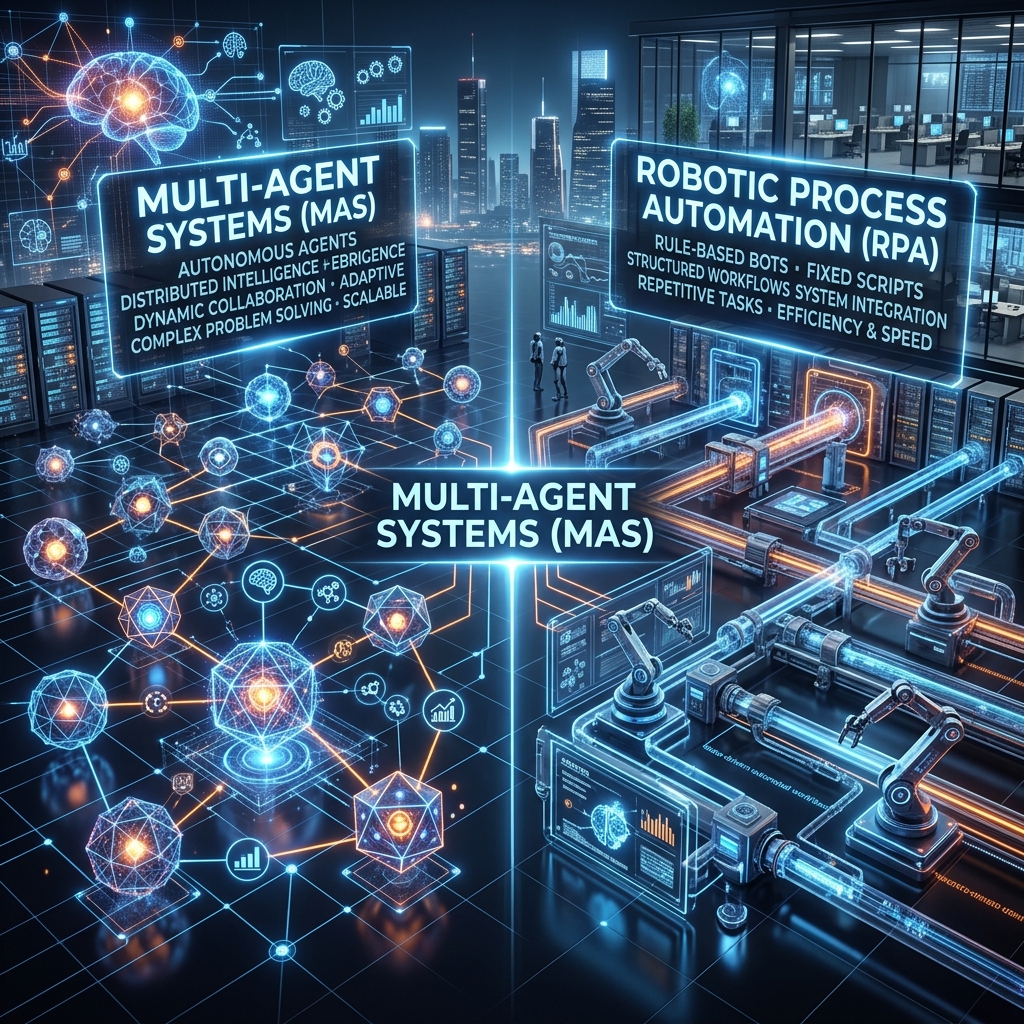
    High-tech dashboard showing Multi-Agent Systems vs. RPA

    Enter Multi-Agent Systems (MAS)

    While RPA automates tasks, Multi-Agent Systems automate outcomes. MAS represents a leap from deterministic scripts to probabilistic, goal-oriented AI. A Multi-Agent System is an environment where multiple intelligent software agents interact, collaborate, and negotiate to solve complex problems that are beyond the capabilities of a single agent or a rigid RPA script.

    What Makes MAS Different?

    Unlike RPA bots, which follow step-by-step instructions (the “how”), agents in a MAS are given a goal (the “what”) and the autonomy to figure out the best path to achieve it. These agents are typically powered by Large Language Models (LLMs) and other advanced AI techniques, endowing them with the ability to perceive their environment, reason about it, and take actions. They can communicate with one another, share context, and coordinate their efforts to tackle multi-faceted challenges.

    Key Characteristics of MAS

    • Autonomy: Agents operate without constant human oversight, making decisions based on their goals and constraints.
    • Adaptability: MAS can dynamically adjust to changes in the environment or the parameters of a task, unlike brittle RPA scripts.
    • Collaboration: Agents can specialize in different sub-tasks and work together to solve complex, overarching problems.
    • Cognition: Powered by AI, agents can process unstructured data, understand intent, and generate human-like reasoning.

    The Shift from Task Automation to Outcome Automation

    The transition from RPA to MAS marks a fundamental shift in how organizations approach automation. It’s the move from automating tasks to automating outcomes.

    Task Automation (RPA)

    In a task automation paradigm, the focus is on efficiency and speed. The goal is to perform a specific, predefined action faster and cheaper than a human. The success metric is often the number of hours saved or the reduction in manual errors for that specific task. However, this approach often creates “islands of automation,” where individual steps are optimized, but the overall process remains fragmented and requires human orchestration.

    Outcome Automation (MAS)

    Outcome automation focuses on the final result. Instead of programming the steps to generate a report, an organization might deploy a MAS with the goal of “providing a weekly analysis of market trends.” The agents within the system would independently gather data from various sources, analyze it, synthesize the findings, and format the report. If a data source is unavailable, the agents can reason about alternative sources, rather than simply failing like an RPA bot. The success metric is the achievement of the overarching business goal.

    Why 2026 is the Year of MAS

    Several converging trends have made 2026 the tipping point for Multi-Agent Systems in the enterprise.

    1. The Maturation of LLMs

    The foundational models that power intelligent agents have reached a level of sophistication where they can consistently reason, plan, and execute complex workflows. The hallucinations and unreliability that plagued earlier iterations have been significantly reduced, making them viable for enterprise-grade automation.

    2. The Demand for Resilience

    The business environment has become increasingly volatile. Organizations can no longer rely on rigid processes that break when faced with the unexpected. The adaptability and self-healing nature of MAS provide the resilience needed to navigate dynamic markets and supply chain disruptions.

    3. The Need for Cognitive Work

    As basic administrative tasks become fully automated, the focus has shifted to automating cognitive work—tasks that require judgment, analysis, and creativity. RPA is ill-equipped for this, but MAS excels at it. Agents can review legal contracts, provide personalized customer support, and even assist in software development.

    Conclusion

    Robotic Process Automation served its purpose as the gateway to enterprise automation. However, as organizations seek to automate increasingly complex, dynamic, and cognitive processes, the limitations of RPA have become insurmountable barriers to scale. Multi-Agent Systems represent the next evolutionary leap. By shifting the focus from automating discrete tasks to orchestrating complex outcomes, MAS offers unparalleled adaptability, resilience, and value. In 2026, the question is no longer whether to automate, but how to automate intelligently. The era of outcome automation has arrived, and Multi-Agent Systems are leading the charge.


  • The Ultimate Business Automation Roadmap: Reclaim Time, Reduce Errors, and Scale in 2026

    The Ultimate Business Automation Roadmap: Reclaim Time, Reduce Errors, and Scale in 2026


    The Ultimate Business Automation Roadmap: Reclaim Time, Reduce Errors, and Scale in 2026

    In 2026, business automation is no longer a luxury; it is a fundamental requirement for survival and growth. As markets become more competitive and consumer expectations rise, organizations that rely on manual, repetitive tasks find themselves quickly outpaced by agile competitors. The Ultimate Business Automation Roadmap is designed to guide businesses through the essential steps of transforming their operations, allowing them to reclaim lost time, significantly reduce human error, and scale their reach without proportional increases in overhead.

    The Imperative of Automation in 2026

    The modern business landscape is characterized by its rapid pace and data-driven nature. Companies are processing more information, managing more complex supply chains, and interacting with customers across a wider array of channels than ever before. Attempting to manage this complexity manually is a recipe for inefficiency and burnout.

    Automation addresses these challenges head-on. By leveraging software, artificial intelligence (AI), and machine learning to handle routine tasks, businesses can free up their human capital to focus on what they do best: strategic planning, creative problem-solving, and building meaningful relationships with clients and partners.

    Reclaiming Your Most Valuable Asset: Time

    Time is the one resource that cannot be replenished. Yet, in many organizations, highly skilled employees spend hours each day on data entry, scheduling, report generation, and other mundane administrative tasks. This not only represents a massive misallocation of resources but also contributes to employee dissatisfaction and high turnover rates.

    Through automation, these time-consuming processes can be executed in a fraction of the time, often instantaneously. Imagine a scenario where invoices are automatically generated and sent upon project completion, or where customer inquiries are routed to the appropriate department without human intervention. The cumulative effect of these automated micro-processes is profound, unlocking thousands of hours annually that can be redirected towards revenue-generating activities.

    High-tech dashboard showing business automation

    Drastically Reducing Human Error

    Human error is an inevitable aspect of manual work. Even the most meticulous employee can make mistakes when fatigued, distracted, or overwhelmed by a high volume of repetitive tasks. These errors can have significant consequences, ranging from minor data discrepancies to major financial losses and damaged reputations.

    Automated systems, on the other hand, perform tasks with consistent precision. Once programmed correctly, a software bot will execute a process exactly the same way every single time. By minimizing human touchpoints in critical workflows—such as financial reconciliation, compliance reporting, and inventory management—businesses can drastically reduce the incidence of errors, thereby improving data integrity and operational reliability.

    The Phases of the Automation Roadmap

    Implementing business automation is not a one-time event but a continuous journey. To ensure success, organizations must follow a structured approach. The Ultimate Business Automation Roadmap outlines a phased strategy that mitigates risk and maximizes return on investment (ROI).

    Phase 1: Discovery and Process Mapping

    The first step in any automation initiative is to thoroughly understand the current state of operations. This involves identifying all the processes within the organization and assessing their suitability for automation. Not every task can or should be automated; the goal is to target processes that are rules-based, repetitive, and time-consuming.

    During the discovery phase, process mapping is essential. This entails creating detailed flowcharts that document every step of a process, identifying inputs, outputs, decision points, and the systems involved. This visual representation helps to uncover bottlenecks, redundancies, and areas where automation can deliver the most significant impact.

    Phase 2: Tool Selection and Pilot Implementation

    With a clear understanding of the processes to be automated, the next step is to select the appropriate tools. The automation landscape in 2026 is vast, encompassing everything from simple task automation platforms to sophisticated Robotic Process Automation (RPA) and AI-driven workflow engines.

    It is highly recommended to start small with a pilot project. Select a single, relatively straightforward process with a high potential for quick ROI. This allows the organization to test the chosen technology, refine the implementation approach, and demonstrate the value of automation to stakeholders without undertaking excessive risk.

    Phase 3: Integration and Orchestration

    As automation initiatives expand, it becomes crucial to ensure that different tools and systems communicate seamlessly with one another. Siloed automation efforts can lead to fragmented data and broken workflows. Phase 3 focuses on integration and orchestration.

    Integration involves connecting disparated software applications via APIs (Application Programming Interfaces) so they can share data in real-time. Orchestration takes this a step further by coordinating complex workflows that span multiple systems and involve both human and automated tasks. A centralized orchestration platform provides a unified view of all automated processes, enabling better monitoring, management, and optimization.

    Phase 4: Scaling and Continuous Improvement

    Once the foundation is laid and successful pilot projects have been deployed, the organization is ready to scale automation across the enterprise. This involves identifying new opportunities, training employees on how to interact with automated systems, and establishing a center of excellence to govern the automation strategy.

    Crucially, automation is an ongoing process of continuous improvement. As business needs evolve and new technologies emerge, existing automated workflows must be regularly reviewed and refined. Leveraging analytics and machine learning can help identify patterns and anomalies, enabling proactive optimization and ensuring that the automation strategy remains aligned with overarching business goals.

    Key Areas Ripe for Automation in 2026

    While the specific processes targeted for automation will vary depending on the industry and organization, several key areas consistently yield significant benefits.

    Marketing and Sales Alignment

    Automation bridges the gap between marketing and sales, ensuring a seamless flow of leads and data. Marketing automation platforms can handle email campaigns, social media posting, and lead nurturing based on user behavior. When a lead reaches a predefined score, it is automatically routed to the CRM system for the sales team to pursue. Furthermore, automated sales workflows can handle follow-up emails, schedule meetings, and generate quotes, allowing sales representatives to focus on closing deals.

    Customer Support and Success

    Providing exceptional customer support is critical for retention and growth. AI-powered chatbots and virtual assistants can handle a large volume of routine inquiries, such as password resets and order status updates, providing immediate resolution for customers. For more complex issues, automated ticketing systems ensure that requests are routed to the appropriate agent with all relevant context, reducing resolution times and improving the overall customer experience.

    Finance and Accounting

    The finance department is often burdened with manual data entry and reconciliation tasks. Automation can streamline accounts payable and receivable processes, automatically extracting data from invoices, matching them against purchase orders, and initiating payments. Month-end close processes can be significantly accelerated through automated journal entries and reconciliation reports, providing leadership with faster access to accurate financial insights.

    Overcoming Common Challenges

    While the benefits of business automation are undeniable, the journey is not without its challenges. Organizations must be prepared to navigate potential roadblocks to ensure a successful implementation.

    Change Management and Employee Resistance

    One of the most significant hurdles in any automation initiative is employee resistance. Concerns about job displacement are common and must be addressed proactively. A robust change management strategy is essential.

    Leadership must communicate clearly that the goal of automation is not to replace human workers, but to augment their capabilities. By eliminating mundane tasks, employees are empowered to take on more strategic and fulfilling roles. Providing comprehensive training and support is crucial to help employees adapt to new workflows and interact effectively with automated systems.

    Data Quality and Security

    Automated systems are only as good as the data they process. Poor data quality can lead to automated errors cascading throughout the organization. Establishing strong data governance practices and ensuring data integrity before implementing automation is vital.

    Furthermore, as businesses become more reliant on digital systems, robust cybersecurity measures are paramount. Automated processes often handle sensitive customer and financial data, making them attractive targets for cyberattacks. Implementing strict access controls, encryption protocols, and regular security audits is necessary to mitigate risk and protect the organization.

    Conclusion: Embracing the Future of Work

    The Ultimate Business Automation Roadmap provides a strategic framework for organizations looking to reclaim time, reduce errors, and scale effectively in 2026. By embracing automation not just as a technological upgrade, but as a fundamental shift in how work is accomplished, businesses can unlock unprecedented levels of efficiency and agility.

    The future belongs to those who leverage technology to empower their human workforce. By systematically identifying opportunities, carefully selecting tools, and fostering a culture of continuous improvement, any organization can successfully navigate the automation journey and position itself for long-term success in the dynamic landscape of 2026 and beyond.


  • The $100 Billion Opportunity: How Agentic AI Is Creating the Next SaaS Gold Rush

    The $100 Billion Opportunity: How Agentic AI Is Creating the Next SaaS Gold Rush

    The $100 Billion Opportunity: How Agentic AI Is Creating the Next SaaS Gold Rush

    The SaaS landscape is undergoing a massive transformation with the advent of Agentic AI. This represents a monumental shift…

    The Dawn of Agentic SaaS

    Gone are the days of passive software. We are entering an era where software works for you…

    Agentic AI Dashboard

    What Makes Agentic AI Different?

    Agentic AI possesses autonomy. It can reason, plan, and execute multi-step processes without human intervention…

    Why It’s a $100 Billion Opportunity

    The economic impact of automating cognitive tasks is staggering…

    Early Adopters Are Reaping the Rewards

    Companies integrating these capabilities are seeing 10x productivity gains…

    The Future is Agentic

    Prepare your enterprise for the AI revolution. The next gold rush is here, and it’s powered by Agentic AI…

  • From Process to Strategy: 6 Intelligent Automation Trends Dominating 2026

    From Process to Strategy: 6 Intelligent Automation Trends Dominating 2026

    From Process to Strategy: 6 Intelligent Automation Trends Dominating 2026

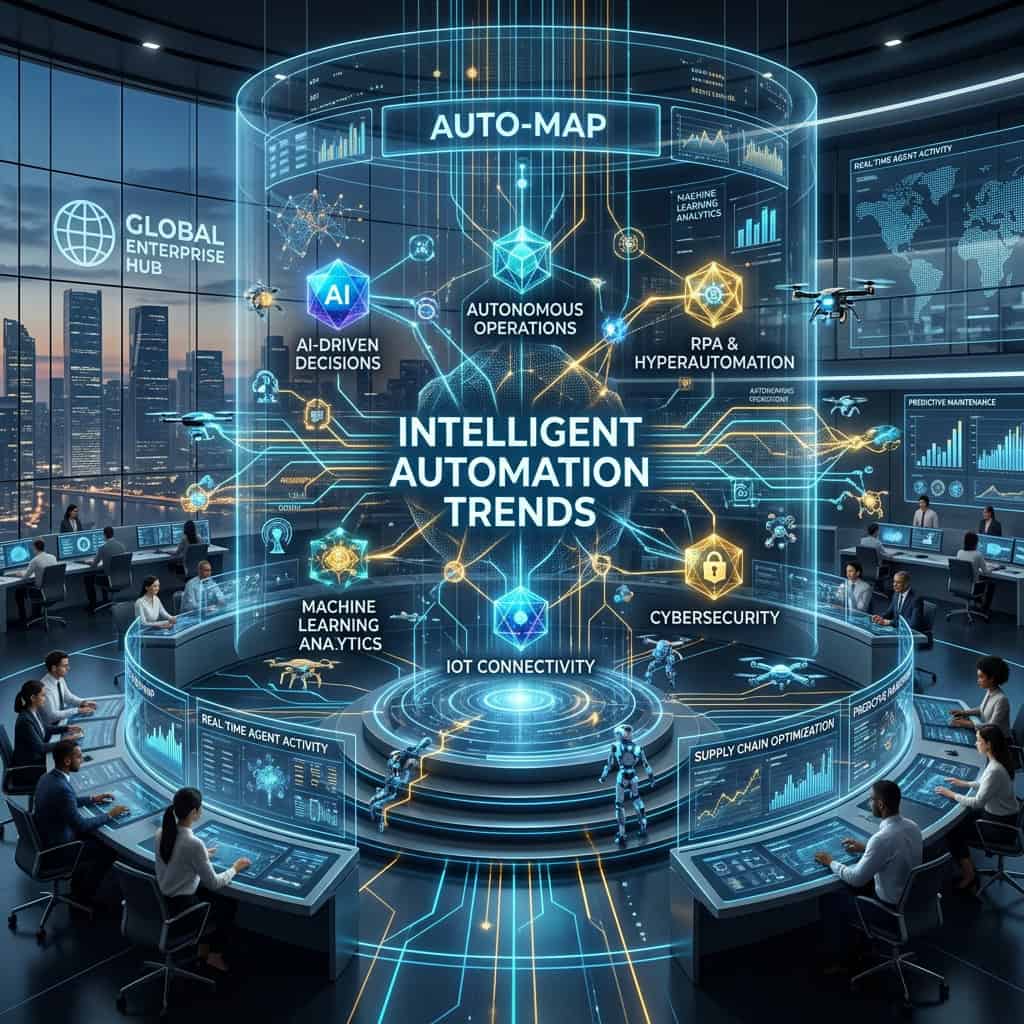
    The year 2026 is seeing a monumental shift in enterprise technology, moving beyond mere process optimization and stepping into the realm of intelligent strategy. Intelligent Automation (IA) is no longer a tactical cost-saving measure; it is the core driver of strategic advantage.

    1. Autonomous Multi-Agent Orchestration

    Unlike traditional RPA that relies on rigid, rule-based workflows, 2026 has introduced autonomous multi-agent orchestration. Software agents now possess the ability to negotiate, delegate, and collaborate to achieve complex business goals.

    The Shift in Enterprise Architecture

    Enterprises are redesigning their tech stacks to accommodate agentic swarms. These autonomous units can self-correct when errors occur, ensuring unparalleled resilience.

    2. Generative AI as the Cognitive Engine

    Generative AI has evolved from a text-producing novelty into the cognitive engine powering enterprise automation. It analyzes unstructured data at scale and makes nuanced decisions.

    Intelligent Automation Dashboard

    3. Hyper-Personalized Customer Experiences

    With IA, customer service is fully proactive. Predictive analytics combined with real-time generative responses means companies often resolve issues before the customer is even aware of them.

    4. Edge Automation and IoT Convergence

    Automation is moving to the edge. By integrating IA directly into IoT devices, decisions are made locally with near-zero latency, transforming industries from manufacturing to healthcare.

    5. Ethical AI and Governance Frameworks

    As AI gains autonomy, governance is critical. 2026 is dominated by built-in compliance frameworks that ensure automation acts ethically and transparently.

    6. The Rise of the Automation Strategist

    The human role has shifted from managing processes to defining strategic boundaries for automation to operate within. The “Automation Strategist” is now a key executive role.

    Conclusion

    Intelligent Automation in 2026 is about strategy. Businesses that embrace these six trends are setting themselves up for exponential growth in an increasingly autonomous world.

  • How to Build a One-Person Empire: The Ultimate Guide to Business Automation for Solopreneurs

    How to Build a One-Person Empire: The Ultimate Guide to Business Automation for Solopreneurs

    How to Build a One-Person Empire: The Ultimate Guide to Business Automation for Solopreneurs

    The Rise of the Solopreneur Empire

    In today’s fast-paced digital economy, the concept of a “one-person business” has evolved from a small lifestyle choice into a powerhouse of efficiency and scale. With the advent of artificial intelligence, no-code tools, and advanced software ecosystems, a single individual can now build, manage, and scale an enterprise that historically required a team of dozens. This is the era of the one-person empire, where business automation is not just a luxury, but the foundational pillar of success.

    Business automation for solopreneurs is about reclaiming the most valuable asset you have: time. By delegating repetitive, time-consuming tasks to machines, solopreneurs can focus on high-leverage activities like strategy, creativity, and relationship building. This guide will take you through the definitive roadmap to automating your business and building an empire without burning out.

    Understanding Business Automation

    At its core, business automation refers to the use of technology to execute recurring tasks or processes in a business where manual effort can be replaced. For a solopreneur, this means setting up systems that handle lead generation, customer onboarding, invoicing, social media posting, and even customer support without your direct involvement.

    Business Automation Dashboard

    When you automate, you are essentially cloning yourself. You create digital assistants that work 24/7, never take breaks, and execute with perfect precision. The key is to identify which parts of your business are repetitive and rule-based, and then find the right tools to handle them.

    Step 1: Automating Your Marketing and Sales

    Social Media and Content Distribution

    Marketing is the lifeblood of any business, but consistently posting content across multiple platforms can be a full-time job. Solopreneurs must utilize social media scheduling tools to plan weeks or even months of content in advance. Tools like Buffer, Hootsuite, or advanced AI-driven platforms can analyze the best times to post and automatically distribute your content. Furthermore, repurposing content—turning a blog post into a Twitter thread, a LinkedIn article, and a newsletter—can be automated using AI tools, multiplying your reach with minimal extra effort.

    Email Marketing and Sales Funnels

    An automated email sequence is your silent salesperson. When a prospect signs up for your lead magnet, an automated sequence should nurture them over time, providing value, building trust, and eventually presenting your offer. Platforms like ConvertKit, ActiveCampaign, or Mailchimp allow you to set up complex triggers based on user behavior. If a user clicks a specific link, they get tagged and sent down a customized path. This ensures that your leads are always engaged, and sales are happening even while you sleep.

    Step 2: Streamlining Operations and Fulfillment

    Client Onboarding

    First impressions matter. When a new client signs a contract or purchases a service, the onboarding process should be seamless and immediate. Automation can handle sending the welcome email, the intake form, the contract for signature, and the first invoice. Using tools like Zapier or Make, you can connect your payment processor (like Stripe) to your CRM and your project management tool, setting up the entire workspace for a new client instantly.

    Product Delivery

    If you sell digital products or courses, automation is straightforward. Once a payment is processed, the system automatically grants access, sends login credentials, and triggers a welcome sequence. But even for service-based solopreneurs, aspects of fulfillment can be automated. Automated templates, standardized workflows, and AI assistants can speed up the delivery of your service, ensuring high quality while reducing the hours you put in.

    Step 3: Financial Management and Administration

    Invoicing and Expense Tracking

    Chasing payments and tracking expenses are tasks that drain a solopreneur’s energy. Modern accounting software like QuickBooks, Xero, or FreshBooks can automate invoicing, send automatic reminders for overdue payments, and even categorize expenses by linking directly to your bank account. By the time tax season arrives, your financial reports are already generated, saving you massive amounts of time and stress.

    Scheduling and Calendar Management

    The back-and-forth of scheduling meetings is a notorious time-waster. Implementing a scheduling tool like Calendly or Acuity Scheduling allows clients to book time on your calendar based on the parameters you set. It automatically handles time zone conversions, sends calendar invites, and even issues reminders, eliminating the friction of manual booking.

    The Mindset of an Automated Solopreneur

    Building a one-person empire requires a shift in mindset. You must transition from being a “doer” of all tasks to being the “architect” of your business systems. It involves upfront work to design the workflows, select the tools, and connect them, but the long-term payoff is exponential.

    Start small. Identify the one task you hate doing the most or the one that takes up the most time, and automate it. Once you experience the relief of having a system handle it, you’ll naturally want to automate more. Remember, the goal of automation is not to make your business robotic, but to free up your human energy for the things that truly matter: creativity, connection, and strategic growth.

    Welcome to the era of the one-person empire. Your automated future awaits.

  • Automate to Dominate: 5 High-ROI Business Processes You Must Automate in 2026

    Automate to Dominate: 5 High-ROI Business Processes You Must Automate in 2026

    Introduction to Business Automation in 2026

    In 2026, automation is no longer a luxury but an absolute necessity for businesses aiming to dominate their markets. The rapid advancement of artificial intelligence and machine learning has made automation accessible to businesses of all sizes, leading to massive returns on investment (ROI). Companies that fail to embrace these technologies risk being left behind by more agile and efficient competitors.

    This article explores the top five high-ROI business processes you must automate this year to streamline operations, reduce costs, and accelerate growth.

    Automation Dashboard

    1. Customer Support and Onboarding

    The Power of AI Chatbots

    Gone are the days when customers had to wait hours or days for a response to simple queries. Advanced AI chatbots, powered by natural language processing (NLP), can now handle up to 80% of routine customer interactions instantly. These virtual assistants are capable of understanding context, sentiment, and intent, providing highly personalized responses 24/7. Automating customer support not only slashes operational costs but also significantly enhances user satisfaction and loyalty.

    Automated Onboarding Workflows

    For SaaS companies and B2B service providers, client onboarding is a critical phase. Automating this process ensures a seamless and consistent experience for every new customer. From automated welcome emails and interactive tutorials to intelligent profile setup, automation reduces the time-to-value for clients, leading to higher retention rates.

    2. Financial Operations and Invoicing

    Accounts Payable and Receivable

    Manual data entry in finance is prone to errors and incredibly time-consuming. Automating accounts payable (AP) and accounts receivable (AR) processes allows businesses to digitize invoice processing, auto-categorize expenses, and schedule payments without human intervention. This ensures faster payment cycles and improves cash flow management.

    Real-Time Financial Reporting

    Modern automation tools integrate directly with your ERP and accounting software to generate real-time financial reports. Instead of waiting until the end of the month to understand your financial health, leaders can access interactive dashboards that provide immediate insights into revenue, expenses, and profitability, enabling data-driven decision-making.

    3. Marketing Campaigns and Lead Nurturing

    Predictive Lead Scoring

    Not all leads are created equal. Automation platforms equipped with predictive analytics can automatically score leads based on their interactions, demographics, and behavior. This allows sales teams to focus their efforts on the highest-probability prospects, dramatically increasing conversion rates.

    Hyper-Personalized Email Marketing

    Batch-and-blast emails are obsolete in 2026. Automation enables dynamic content creation where email sequences adapt based on user behavior. If a user clicks a specific link, the automation flow adjusts in real-time to serve them relevant content, driving higher engagement and sales.

    4. Human Resources and Talent Acquisition

    Intelligent Candidate Screening

    Sorting through thousands of resumes is a daunting task for any HR department. Automated screening tools use AI to scan resumes, evaluate qualifications, and even conduct preliminary behavioral assessments through video interviews. This drastically reduces time-to-hire and helps companies secure top talent faster.

    Employee Offboarding

    Just as onboarding is crucial, so is offboarding. Automating the offboarding process ensures compliance, revokes access to company systems securely, and conducts automated exit surveys, providing valuable feedback while mitigating security risks.

    5. Supply Chain and Inventory Management

    Demand Forecasting

    Predicting inventory needs accurately is vital for retail and manufacturing. Automated forecasting tools analyze historical sales data, market trends, and even external factors like weather to predict future demand with remarkable precision. This prevents stockouts and reduces excess inventory carrying costs.

    Automated Reordering Systems

    When stock levels reach a predetermined threshold, automated systems can instantly generate purchase orders and send them to suppliers. This seamless integration between inventory management and procurement ensures that your supply chain operates without a hitch.

    Conclusion

    Automating these five high-ROI processes is the blueprint for business domination in 2026. By offloading repetitive tasks to intelligent systems, organizations can empower their workforce to focus on strategic initiatives, innovation, and relationship building. The future belongs to those who automate.

  • No-Code Agent Builders: How to Deploy AI Workflows Without a Developer

    No-Code Agent Builders: How to Deploy AI Workflows Without a Developer

    No-Code Agent Builders: How to Deploy AI Workflows Without a Developer

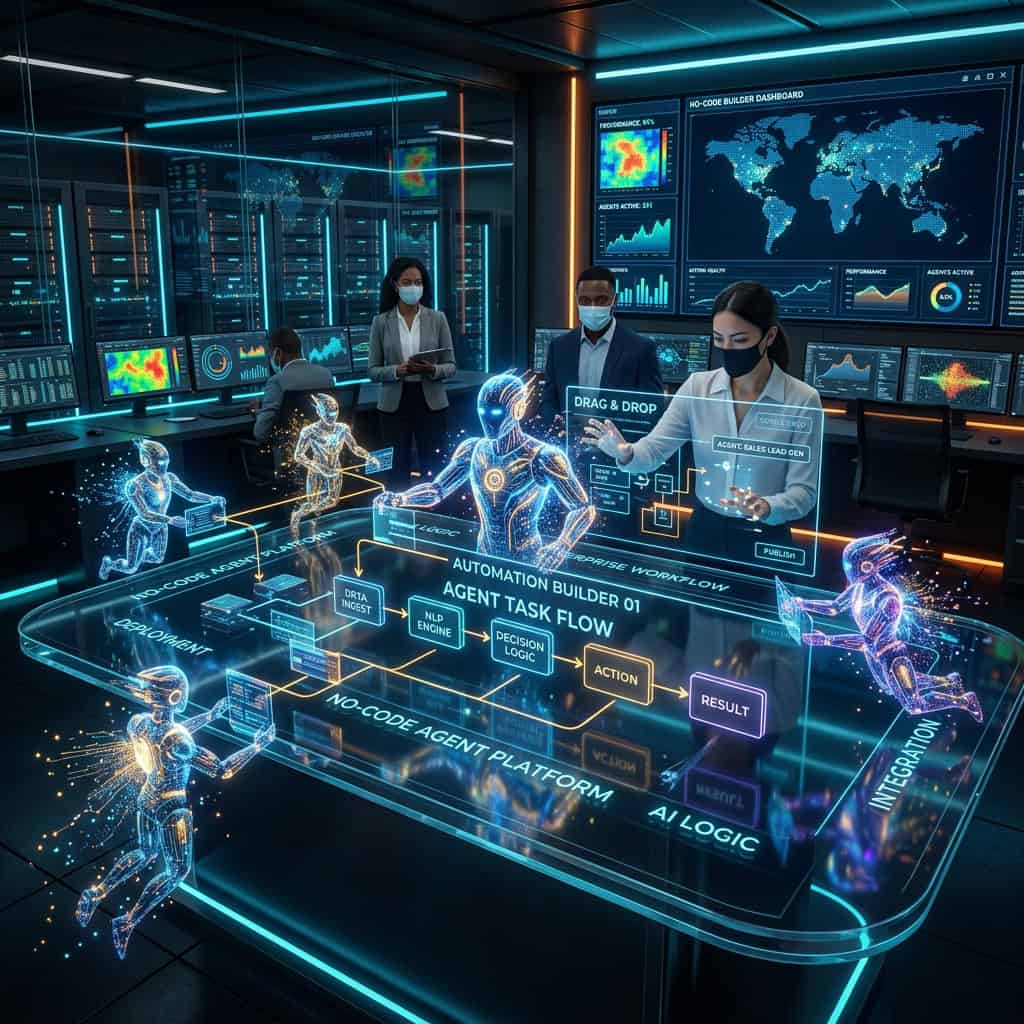
    The artificial intelligence revolution is no longer confined to the realms of elite software engineers and data scientists. The emergence of no-code agent builders has democratized the ability to create, deploy, and manage sophisticated AI workflows. If you’ve ever wanted to automate complex tasks, orchestrate multiple AI agents, or streamline your business operations without writing a single line of code, this guide is for you.

    No-Code Agent Builders Dashboard

    What Are No-Code Agent Builders?

    No-code agent builders are platforms that allow users to design AI-driven workflows using visual interfaces. Instead of coding scripts in Python or JavaScript, you drag and drop components, configure settings through intuitive forms, and connect various AI models and tools seamlessly.

    The Core Components of an Agent Builder

    • Visual Canvas: A workspace where you define the flow of data and actions.
    • Pre-built Integrations: Connectors to popular APIs, databases, and third-party services.
    • LLM Nodes: Blocks that represent Large Language Models (LLMs) tasked with specific reasoning or generation tasks.
    • Triggers and Actions: Event-driven architecture that starts a workflow when a specific condition is met (e.g., an email arrives) and executes a defined action.

    Why You Need AI Workflows in Your Business

    Integrating AI workflows into your business isn’t just about saving time; it’s about scaling your capabilities exponentially. Here’s why deploying AI agents is a game-changer:

    • Cost Efficiency: Reduce the need for large operational teams for repetitive tasks.
    • 24/7 Availability: AI agents don’t sleep. They process customer queries, analyze data, and execute tasks around the clock.
    • Reduced Human Error: Automated workflows follow logic precisely, minimizing the risk of manual mistakes.

    Step-by-Step Guide to Deploying AI Workflows Without a Developer

    Step 1: Identify the Process to Automate

    The first step is identifying a bottleneck or a repetitive task in your business. It could be customer support triage, lead generation, data entry, or content creation. Map out the current manual process.

    Step 2: Choose the Right No-Code Platform

    Several platforms excel at no-code AI orchestration. Evaluate them based on their ease of use, integration capabilities, and pricing. Look for platforms that support multiple LLM providers to ensure flexibility.

    Step 3: Design the Workflow visually

    Use the platform’s visual canvas to recreate your mapped process. Start with a trigger, add the necessary context or data retrieval steps, incorporate an LLM node to process the information, and define the final action or output.

    Step 4: Test and Refine

    Before deploying your workflow to production, run comprehensive tests. Input various scenarios and edge cases to see how the AI agent responds. Refine the prompts and logic based on the test results to ensure accuracy and reliability.

    Future of No-Code AI

    As no-code platforms become more sophisticated, the barrier to entry for building complex AI systems will continue to lower. We are entering an era where business acumen and process knowledge are more critical than coding skills when it comes to leveraging the power of Artificial Intelligence.

  • The Automation Imperative: Why Your Business Won’t Survive 2026 Without AI

    The Automation Imperative: Why Your Business Won’t Survive 2026 Without AI

    The Automation Imperative: Why Your Business Won’t Survive 2026 Without AI

    As we approach the latter half of the decade, a stark reality is setting in for businesses across all sectors: the integration of Artificial Intelligence (AI) is no longer a luxury, nor a futuristic concept to be explored “someday.” It is a fundamental requirement for survival.

    The New Baseline of Efficiency

    In 2026, AI is expected to define the baseline of operational efficiency. The automation imperative means that tasks which previously required hours of human labor are now executed in seconds by sophisticated AI agents.

    Autonomous Agents in the Enterprise

    The rise of autonomous agents has revolutionized how we approach work. These aren’t just chatbots; they are complex software entities capable of reasoning, planning, and executing multi-step tasks across various platforms.

    High-tech AI dashboard
    Modern AI Dashboard in Action

    Why Non-Adopters Will Perish

    Companies that fail to integrate AI by 2026 will simply not be able to compete. The cost of human labor for tasks that can be automated will drain resources, leading to higher prices, slower service, and ultimately, a loss of market share.

    The Cost of Inaction

    The cost of inaction is too high. The gap between AI adopters and laggards is widening exponentially. Early adopters have already secured a significant advantage in data processing, customer service, and strategic planning.

    Preparing Your Business for 2026

    To survive and thrive, businesses must immediately begin embedding AI into their core operations. This requires a shift in mindset, from viewing AI as a tool to seeing it as a digital workforce.

    Strategic Integration

    Strategic integration involves identifying bottlenecks, training staff to work alongside AI, and continuously updating systems to leverage the latest advancements in machine learning.

    Conclusion: The automation imperative is here. Embrace AI, or prepare to be left behind.

  • Agentic AI in 2026: How Autonomous Agents Are Rescripting Enterprise Automation

    Agentic AI in 2026: How Autonomous Agents Are Rescripting Enterprise Automation

    The Dawn of Agentic AI: Why 2026 is the Year of Autonomous Operations

    In 2026, the term “automation” has evolved dramatically. We are no longer talking about simple, rigid, rule-based software that moves data from point A to point B. We have entered the era of Agentic AI—where artificial intelligence is not just a tool that executes predefined commands, but an autonomous agent capable of planning, reasoning, collaborating, and executing complex workflows with minimal human intervention. According to recent Gartner studies, 42% of global enterprises expect to fully deploy AI agents within their operational tech stacks by the end of 2026, completely rescripting the future of enterprise automation.

    For founders, executives, and operators, understanding the shift from traditional automation to Agentic AI is no longer optional. It is a fundamental requirement for remaining competitive. In this comprehensive guide, we will explore exactly what Agentic AI is, how autonomous agents differ from robotic process automation (RPA), and how you can begin deploying these intelligent systems to drive unprecedented ROI in your business.

    What is Agentic AI?

    Agentic AI refers to artificial intelligence systems designed with goal-oriented agency. Unlike traditional large language models (LLMs) that simply answer prompts or generate text, an agentic system is given a high-level goal and is trusted to figure out the steps required to achieve that goal. It can browse the web, interact with software APIs, read and write to databases, spawn sub-agents to handle specialized micro-tasks, and self-correct when it encounters errors.

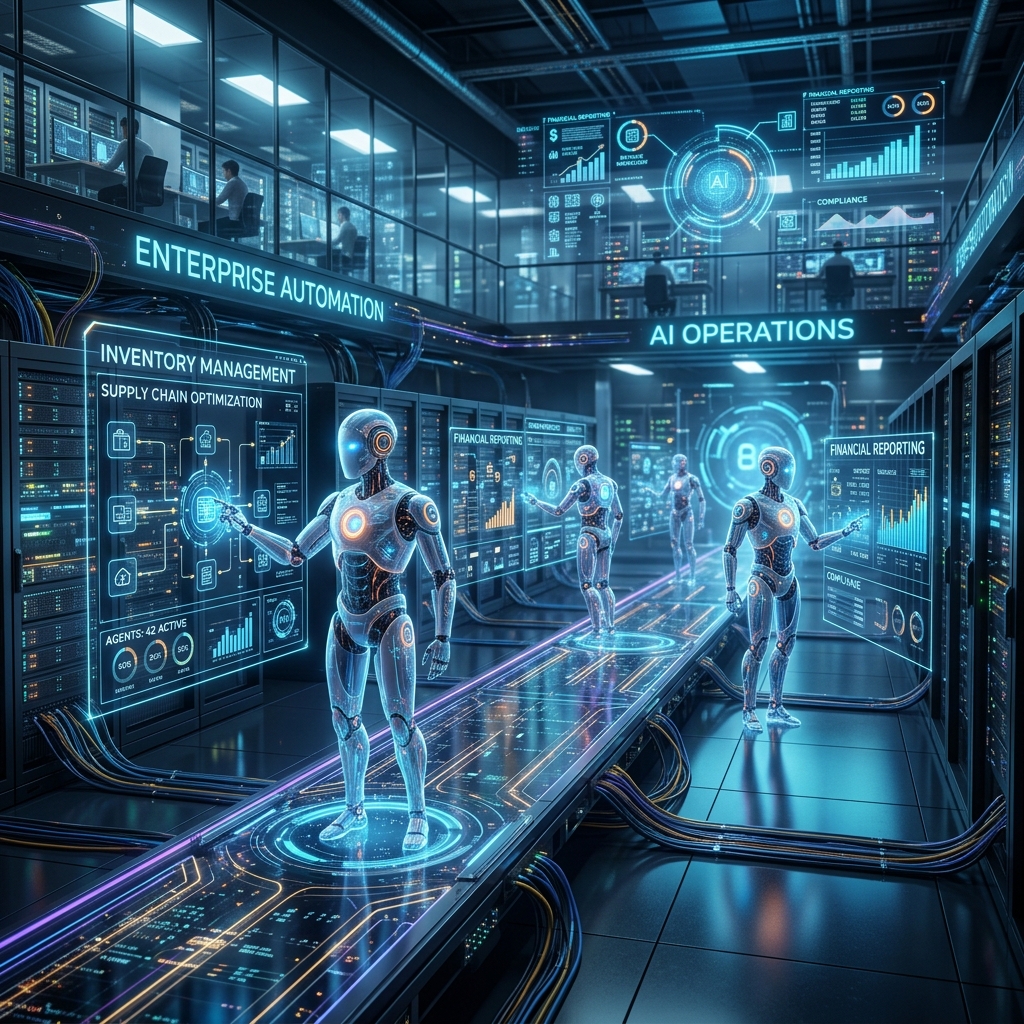
    High-tech dashboard showing autonomous AI agents working in harmony
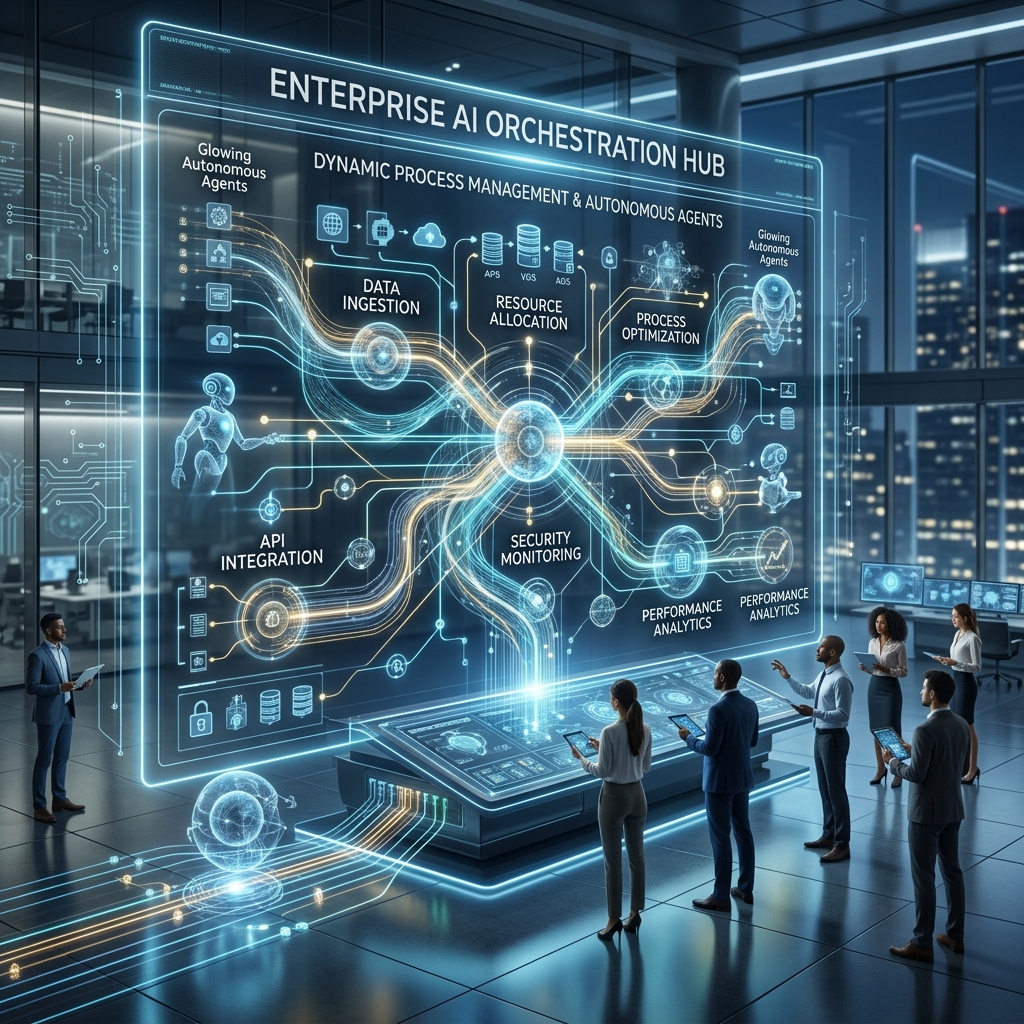
    Agentic AI orchestrates complex data streams and workflows dynamically, unlike traditional linear RPA.

    Imagine telling your traditional automation software: “If a customer emails requesting a refund, check if the purchase was within 30 days, and if so, trigger a refund in Stripe and send a confirmation email.” That is RPA. It requires a human to map out every single logical step, exception, and API endpoint. If the Stripe API changes, the automation breaks. If the customer’s email is phrased unusually, the automation fails.

    Now imagine telling an autonomous AI agent: “Manage customer refund requests according to our company policy.” The Agentic AI reads the email, understands the context and sentiment, looks up the company policy dynamically, queries the CRM to find the customer’s purchase history, logs into the payment gateway to process the refund if valid, drafts a personalized apology email, and updates the ticket in Zendesk. If it encounters a scenario not explicitly covered by the policy, it escalates to a human manager with a concise summary of the edge case.

    This is the power of Agentic AI. It shifts the burden of how a task is done from the human developer to the AI itself, focusing purely on what the desired outcome is.

    The Evolution: From RPA to Multi-Agent Systems

    To fully grasp the magnitude of this shift, we must look at how enterprise automation has evolved over the last decade.

    The Era of Robotic Process Automation (RPA)

    In the 2010s, RPA revolutionized back-office operations. Tools like UiPath and Automation Anywhere allowed businesses to record human screen interactions and replay them to automate mundane tasks like invoice processing or data entry. However, RPA has severe limitations. It is inherently “brittle.” Because it relies on fixed rules and structured data, any change in the user interface of an application or any unstructured input (like a messy email or a poorly scanned PDF) causes the bot to crash.

    The Introduction of Generative AI

    With the explosion of Generative AI in 2023, businesses suddenly had access to systems that could understand unstructured data. You could feed an LLM an email and ask it to extract the relevant data points. This led to “Intelligent Automation,” where RPA bots were augmented with LLMs to handle slightly more complex inputs. But the core architecture remained linear and human-directed.

    The Rise of Agentic AI and Multi-Agent Orchestration

    Today, in 2026, we have moved beyond linear workflows into Multi-Agent Systems (MAS). Instead of one large, monolithic AI trying to do everything, enterprises deploy specialized “teams” of autonomous agents. You might have a Research Agent that scours the web for competitor pricing, an Analysis Agent that processes that data to find market gaps, and an Execution Agent that drafts a report and emails it to the strategy team. These agents communicate with each other, debate solutions, and hand off tasks seamlessly.

    Core Capabilities Driving the 2026 Enterprise AI Revolution

    Why is this specific moment in 2026 the tipping point for autonomous agents? It comes down to three massive leaps in core AI capabilities that have matured over the last two years.

    1. Advanced Cognitive Decision Making

    Modern AI agents possess advanced reasoning capabilities. They can break down complex, multi-step problems into smaller, manageable sub-tasks. This “Chain of Thought” reasoning allows them to evaluate different approaches, predict potential outcomes, and select the most efficient path forward. They are no longer just execution engines; they are cognitive workers.

    2. Tool Use and API Integration

    Agents are now native “tool users.” Through standard frameworks, an AI agent can be granted access to a company’s internal tools—Salesforce, Slack, Jira, AWS, or custom internal databases. When an agent realizes it needs data it doesn’t currently possess, it can independently write an SQL query, fetch the data, and use it to continue its task. This bridges the gap between AI as a conversational interface and AI as an operational engine.

    3. Self-Reflection and Error Correction

    Perhaps the most critical advancement for enterprise adoption is the ability of agents to self-reflect. If an agent attempts to call an API and receives a 400 Bad Request error, it doesn’t just crash and throw an exception to a human. It reads the error message, realizes it formatted the JSON payload incorrectly, rewrites the payload, and tries again. This resilience drastically reduces the maintenance burden that crippled older automation systems.

    Real-World Enterprise Applications in 2026

    The theoretical capabilities of Agentic AI are fascinating, but the practical applications are where the massive ROI is generated. Here is how forward-thinking enterprises are rescripting their operations today.

    Hyper-Personalized Customer Resolution

    Customer service has moved far beyond rigid chatbots. Today’s “Resolution Agents” don’t just point customers to FAQ articles; they actively solve problems. If a customer complains about a delayed shipment, the agent can check the FedEx API, cross-reference the warehouse inventory, issue a partial credit for the inconvenience, and re-order the item via expedited shipping—all within seconds, with zero human intervention.

    Dynamic Supply Chain Optimization

    Supply chains are incredibly complex and vulnerable to global disruptions. Procurement agents now monitor global news, weather patterns, and supplier financial health in real-time. If an agent detects a potential port strike in a region where a key component is sourced, it can autonomously calculate the risk, identify alternative suppliers in unaffected regions, request quotes, and present the procurement manager with a fully drafted purchase order for an alternative supply source, preventing weeks of delays.

    IT Operations and Auto-Remediation

    In IT and cybersecurity, seconds matter. “Remediation Agents” constantly monitor network traffic and server health. When an anomaly is detected—such as a sudden spike in CPU usage indicating a potential DDoS attack—the agent can autonomously scale up server capacity, isolate the affected nodes, apply temporary firewall rules, and page the on-call engineer with a detailed forensic summary of what happened and the actions already taken to mitigate the threat.

    The Business ROI: Why You Can’t Wait

    The financial impact of deploying Agentic AI is staggering. By shifting from process automation to outcome automation, companies are seeing benefits across multiple vectors:

    • Exponential Scalability: Autonomous agents do not sleep, do not get bogged down by context switching, and can be scaled instantly during peak demand periods without the overhead of hiring and training seasonal staff.
    • Drastic Error Reduction: While human error is inevitable in repetitive, data-heavy tasks, well-configured agents operate with near-perfect accuracy, eliminating the costly downstream effects of data entry mistakes.
    • Strategic Human Reallocation: By offloading cognitive busywork to agents, human employees are freed to focus on high-value, strategic, and creative endeavors that directly drive revenue and innovation. This also drastically improves employee satisfaction and retention.
    • Faster Time-to-Market: Workflows that previously took weeks of cross-departmental coordination can now be executed by a swarm of multi-agent systems in hours or days.

    Challenges and Considerations for the Enterprise

    Despite the incredible potential, deploying Agentic AI is not without its challenges. Enterprise leaders must navigate several critical hurdles to ensure successful adoption.

    Governance and Security

    When you give an AI agent the ability to execute actions in your CRM or financial systems, you must have robust governance in place. “Agentic drift”—where an agent hallucinates a solution and executes an incorrect action—can have serious consequences. Enterprises must implement “Human-in-the-Loop” (HITL) approval gates for high-stakes actions, strict role-based access controls (RBAC) for agents, and comprehensive audit logs detailing every decision an agent makes.

    The Integration Burden

    Agents are only as powerful as the tools they can use. If your enterprise relies on legacy, on-premise software with no APIs, deploying autonomous agents will be incredibly difficult. Modernizing infrastructure and exposing clean, well-documented APIs is a prerequisite for a successful Agentic AI rollout.

    Cultural Resistance

    The introduction of highly capable, autonomous digital workers often triggers anxiety among the human workforce. Leadership must clearly communicate that agents are designed to augment, not replace, human talent. The narrative must shift from “AI taking jobs” to “AI eliminating the parts of your job you hate.”

    Conclusion: The Automation Imperative

    As we navigate 2026, the era of human-driven, linear automation is officially over. Agentic AI is not a distant futuristic concept; it is the reality of modern enterprise operations. The companies that learn to build, deploy, and manage autonomous agents will operate with a level of speed, efficiency, and agility that their competitors simply cannot match.

    The question is no longer if you should deploy Agentic AI, but how fast you can integrate it into your core business strategy. The future of automation is outcome-oriented, distributed, and brilliantly autonomous. It’s time to rescript your enterprise.

    Ready to build your own automated systems? Explore our premium AI Automation Library to download the exact blueprints and workflows we use to scale modern operations.