AI-Powered Orchestration: Why Automation Is No Longer Just a Tool, It’s a Teammate
In the fast-paced, hyper-connected world of modern enterprise, the definition of work is rapidly evolving. For decades, automation has been the silent engine driving efficiency—a reliable tool designed to handle repetitive, mundane tasks and free up human workers for higher-level, strategic thinking. But as we cross the threshold into the era of advanced artificial intelligence, automation is undergoing a profound and fundamental transformation. Enter AI-powered orchestration: a paradigm shift that elevates automation from a mere mechanical tool to an intelligent, proactive, and indispensable teammate.
The Evolution: From Mechanical Automation to Intelligent Orchestration
To understand the magnitude of this shift, we must first look at where we started. Traditional automation typically involves strict, rule-based processes. You define a trigger, set a linear series of actions, and the system executes them flawlessly every time. It is fantastic for predictable, high-volume tasks like data entry, basic invoice processing, or sending scheduled emails. However, traditional automation has severe limitations. It struggles with ambiguity, fails when faced with complex decision-making, and breaks down completely when it encounters unforeseen changes or exceptions.
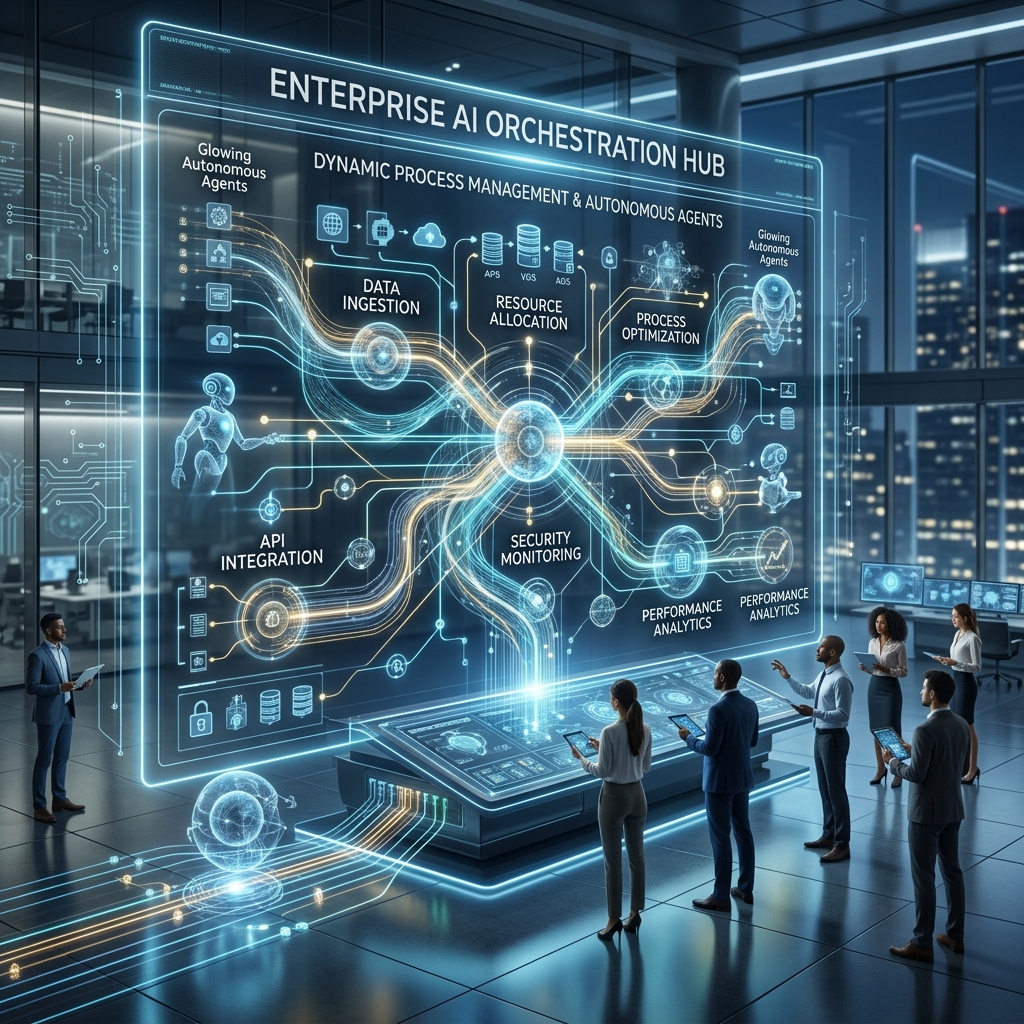
AI-powered orchestration changes the game entirely by introducing cognitive capabilities and contextual awareness into the operational mix. It doesn’t just blindly follow pre-defined scripts; it understands context, learns from past interactions, and makes decisions dynamically based on real-time data. Instead of executing isolated automated tasks, orchestration manages complex, multi-layered workflows across various disparate systems, legacy applications, and even human teams. It is the conductor of the enterprise symphony, ensuring every instrument plays in perfect harmony.
Why AI is the Ultimate Enterprise Teammate
When leaders stop viewing AI as just another piece of software and start seeing it as a collaborative partner, its true value becomes breathtakingly clear. Here is how this advanced orchestration technology acts less like a cold, rigid program and more like a dynamic, invaluable teammate:
1. Proactive Problem Solving and Predictive Action
Unlike traditional automation, which waits passively for a predefined trigger, AI orchestration can anticipate issues before they escalate into crises. By analyzing vast amounts of enterprise data in real-time—from network traffic and server loads to global supply chain logistics and customer sentiment—it can identify subtle patterns and anomalies that a human analyst might miss. For example, it can predict a potential supply chain bottleneck based on emerging geopolitical news and global weather patterns, automatically suggesting or even executing contingency plans, such as rerouting shipments or adjusting inventory orders, before the business feels any impact.
2. Seamless Cross-Platform Integration and Communication
A good human teammate knows how to communicate and collaborate with everyone in the office. AI orchestration excels at connecting siloed, disparate systems. It acts as a universal translator and central nervous system for your tech stack, enabling your Customer Relationship Management (CRM) system to talk seamlessly with your Enterprise Resource Planning (ERP) software, marketing automation platforms, and customer support ticketing systems. It gathers insights from all these diverse sources to provide a unified, holistic view of operations, breaking down departmental silos and ensuring everyone—human or machine—is operating from the same single source of truth.
3. Context-Aware Decision Making at Scale
Perhaps the most “human” trait of AI orchestration is its ability to understand nuance and context. It doesn’t just process isolated data points; it analyzes the complex relationships between them. When a high-value client submits an urgent support ticket, an AI orchestrator doesn’t just put it in a queue. It analyzes the client’s entire history, current contract value, recent sentiment in communications, and the specific nature of the problem. It then intelligently prioritizes the ticket and routes it to the most qualified human agent, automatically surfacing relevant documentation, past interactions, and even suggested responses, drastically reducing resolution time and improving client satisfaction.
4. Continuous Learning and Exponential Improvement
A traditional software tool remains static until a developer manually pushes an upgrade. A teammate, however, learns from experience and grows more capable over time. AI-powered orchestration systems leverage advanced machine learning algorithms to continuously refine their operations. The more workflows they orchestrate, the more data they ingest, the better they get at predicting outcomes, optimizing resource allocation, and uncovering hidden efficiencies that were previously invisible to human management.
The Profound Impact on the Human Workforce
A persistent fear surrounding advanced AI is that it will render human workers obsolete. However, the reality of AI orchestration points to a very different future: not the end of human work, but the elevation of it. By offloading the heavy burden of complex, multi-system coordination, data gathering, and routine decision-making to an AI teammate, human employees are liberated.
They are empowered to focus their energy on what humans do best and what machines still cannot: creative problem-solving, empathetic leadership, strategic long-term planning, and building complex, nuanced relationships with clients and partners.
Imagine a modern marketing department where the AI orchestrator handles the granular details—optimal timing for emails, platform-specific content formatting, continuous A/B testing across dozens of global markets, and real-time budget reallocation based on campaign performance. Meanwhile, the human marketers focus purely on crafting compelling brand narratives, dreaming up innovative campaign concepts, and understanding deep human psychology. This synergy between human creativity and AI execution is where the true, sustainable competitive advantage of the future lies.
A Roadmap: Implementing AI Orchestration in Your Business
Transitioning from basic, task-level automation to intelligent AI orchestration is not just a technological upgrade; it is a strategic business transformation. It requires a thoughtful, phased approach:
1. Assess Your Readiness and Data Maturity
Evaluate your current data infrastructure honestly. AI thrives on high-quality data. Ensuring your enterprise data is clean, accessible, structured, and secure is a non-negotiable first step. Identify the complex, multi-step workflows in your organization that currently span multiple departments and software systems—these are your prime candidates for orchestration.
2. Choose the Right Orchestration Platform
Not all AI tools are created equal. Look for enterprise-grade orchestration platforms that offer strong, secure integration capabilities (APIs and pre-built connectors), robust AI and machine learning models, and, crucially, a low-code or no-code user-friendly interface. The goal is to empower business users and domain experts, not just IT specialists, to design, manage, and optimize workflows.
3. Start Small, Measure, and Scale Fast
Avoid the temptation to boil the ocean and orchestrate your entire enterprise in one massive project. Start with a specific, high-impact, yet well-defined use case—perhaps employee onboarding, IT incident resolution, or order-to-cash processing. Measure the results rigorously, refine the AI’s parameters, prove the return on investment, and then systematically scale the solution to other critical areas of the business.
Conclusion: The Future of Work is Deeply Collaborative
The narrative that artificial intelligence is a direct replacement for human ingenuity is not only outdated but fundamentally flawed. The future belongs to visionary organizations that embrace AI not as a threat, but as a collaborative partner. AI-powered orchestration is the vital engine that will drive this new era of work, transforming static, siloed businesses into agile, intelligent, and highly efficient ecosystems.
As we navigate the complexities of the 21st-century economy, the most successful teams will undoubtedly be those that learn to seamlessly blend human intuition and creativity with artificial intelligence’s speed, scale, and precision. Automation is no longer just a wrench in the toolbox; it is the brilliant teammate sitting next to you, ready and able to help you achieve the extraordinary.
Leave a Reply