Multi-Agent Systems vs. RPA: Why 2026 Is the Year of Outcome Automation
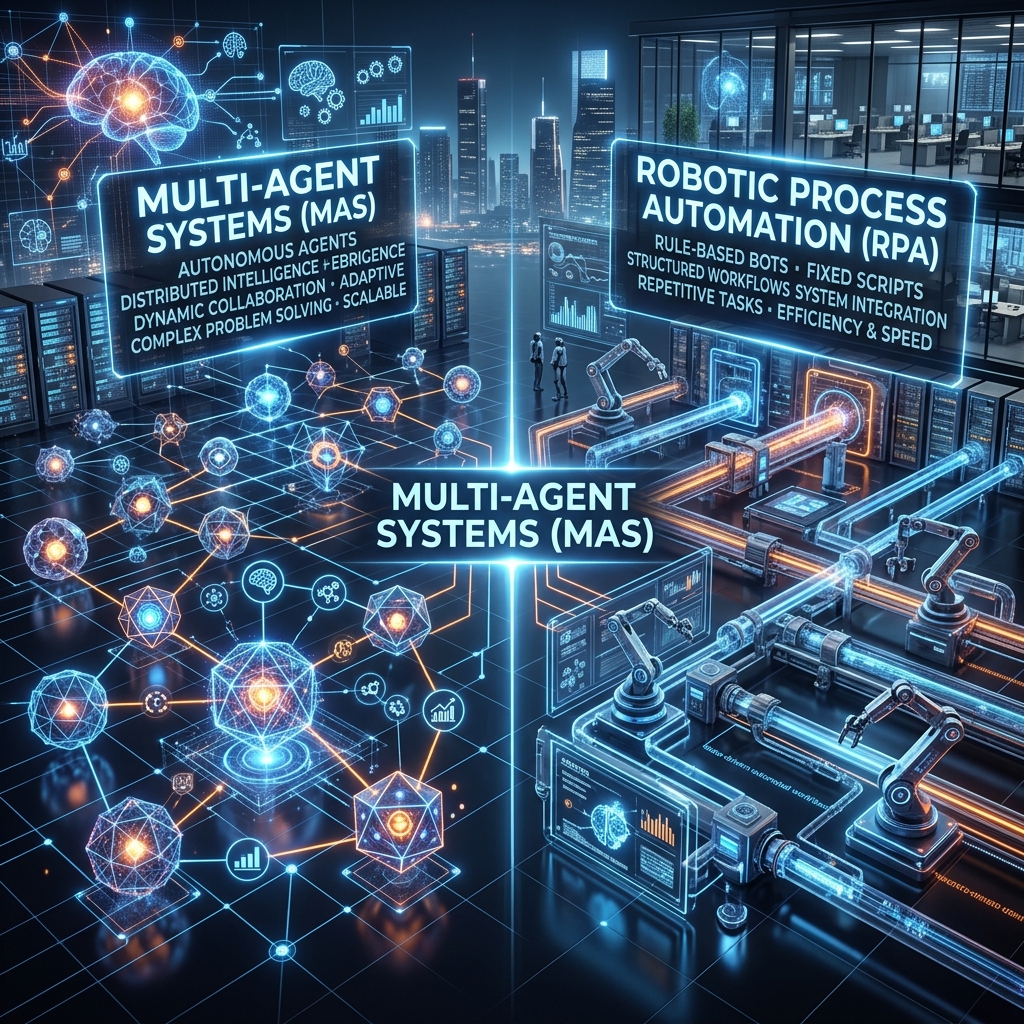
The enterprise automation landscape is experiencing a tectonic shift. For over a decade, Robotic Process Automation (RPA) was the crown jewel of digital transformation initiatives. It promised to free human workers from repetitive, mundane tasks, replacing manual labor with tireless software bots. However, as we move into 2026, a new paradigm has emerged to challenge the status quo: Multi-Agent Systems (MAS). This article explores the core differences between MAS and RPA, and why 2026 is universally recognized as the year of outcome automation.
The Era of Robotic Process Automation (RPA)
RPA operates on a relatively straightforward premise: observe a human performing a rule-based digital task and program a bot to replicate those exact steps. By interacting with the user interfaces of existing applications, RPA bots can extract data, fill out forms, move files, and execute transactions without requiring complex API integrations. This “surface-level” automation made RPA highly accessible and quick to deploy.
Strengths of RPA
The primary advantage of RPA is its non-invasive nature. Because bots interact with systems just like humans do, there’s no need to overhaul legacy IT infrastructure. This allowed organizations to realize quick wins and immediate ROI. RPA excels in environments where processes are highly standardized, voluminous, and rarely change. Tasks like invoice processing, data entry, and basic customer onboarding became prime candidates for RPA.
Limitations of RPA
Despite its initial success, RPA’s limitations have become increasingly apparent. RPA bots are fundamentally brittle. They rely on fixed instructions and static user interfaces. If an application updates its UI, or if a process deviates slightly from the defined rules, the bot breaks. This fragility leads to high maintenance costs and significant downtime. Furthermore, RPA is “dumb” automation. It lacks cognitive abilities; it cannot reason, learn from experience, or handle exceptions gracefully. When faced with ambiguity, an RPA bot simply stops working and requires human intervention.
Enter Multi-Agent Systems (MAS)
While RPA automates tasks, Multi-Agent Systems automate outcomes. MAS represents a leap from deterministic scripts to probabilistic, goal-oriented AI. A Multi-Agent System is an environment where multiple intelligent software agents interact, collaborate, and negotiate to solve complex problems that are beyond the capabilities of a single agent or a rigid RPA script.
What Makes MAS Different?
Unlike RPA bots, which follow step-by-step instructions (the “how”), agents in a MAS are given a goal (the “what”) and the autonomy to figure out the best path to achieve it. These agents are typically powered by Large Language Models (LLMs) and other advanced AI techniques, endowing them with the ability to perceive their environment, reason about it, and take actions. They can communicate with one another, share context, and coordinate their efforts to tackle multi-faceted challenges.
Key Characteristics of MAS
- Autonomy: Agents operate without constant human oversight, making decisions based on their goals and constraints.
- Adaptability: MAS can dynamically adjust to changes in the environment or the parameters of a task, unlike brittle RPA scripts.
- Collaboration: Agents can specialize in different sub-tasks and work together to solve complex, overarching problems.
- Cognition: Powered by AI, agents can process unstructured data, understand intent, and generate human-like reasoning.
The Shift from Task Automation to Outcome Automation
The transition from RPA to MAS marks a fundamental shift in how organizations approach automation. It’s the move from automating tasks to automating outcomes.
Task Automation (RPA)
In a task automation paradigm, the focus is on efficiency and speed. The goal is to perform a specific, predefined action faster and cheaper than a human. The success metric is often the number of hours saved or the reduction in manual errors for that specific task. However, this approach often creates “islands of automation,” where individual steps are optimized, but the overall process remains fragmented and requires human orchestration.
Outcome Automation (MAS)
Outcome automation focuses on the final result. Instead of programming the steps to generate a report, an organization might deploy a MAS with the goal of “providing a weekly analysis of market trends.” The agents within the system would independently gather data from various sources, analyze it, synthesize the findings, and format the report. If a data source is unavailable, the agents can reason about alternative sources, rather than simply failing like an RPA bot. The success metric is the achievement of the overarching business goal.
Why 2026 is the Year of MAS
Several converging trends have made 2026 the tipping point for Multi-Agent Systems in the enterprise.
1. The Maturation of LLMs
The foundational models that power intelligent agents have reached a level of sophistication where they can consistently reason, plan, and execute complex workflows. The hallucinations and unreliability that plagued earlier iterations have been significantly reduced, making them viable for enterprise-grade automation.
2. The Demand for Resilience
The business environment has become increasingly volatile. Organizations can no longer rely on rigid processes that break when faced with the unexpected. The adaptability and self-healing nature of MAS provide the resilience needed to navigate dynamic markets and supply chain disruptions.
3. The Need for Cognitive Work
As basic administrative tasks become fully automated, the focus has shifted to automating cognitive work—tasks that require judgment, analysis, and creativity. RPA is ill-equipped for this, but MAS excels at it. Agents can review legal contracts, provide personalized customer support, and even assist in software development.
Conclusion
Robotic Process Automation served its purpose as the gateway to enterprise automation. However, as organizations seek to automate increasingly complex, dynamic, and cognitive processes, the limitations of RPA have become insurmountable barriers to scale. Multi-Agent Systems represent the next evolutionary leap. By shifting the focus from automating discrete tasks to orchestrating complex outcomes, MAS offers unparalleled adaptability, resilience, and value. In 2026, the question is no longer whether to automate, but how to automate intelligently. The era of outcome automation has arrived, and Multi-Agent Systems are leading the charge.
Leave a Reply